 Reviews

 Proudly American

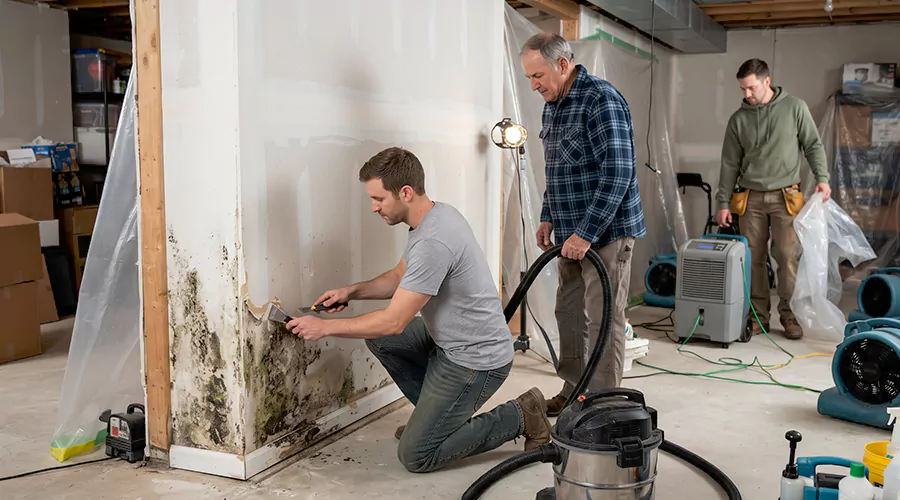
Mold damage restoration is the process of finding the moisture source, removing contaminated materials, cleaning salvageable surfaces, drying the structure, and repairing damaged areas. It becomes necessary when mold has affected building materials or when water damage has created conditions that allow growth to continue.
Mold can develop after leaks or flooding when damp materials do not dry quickly. EPA guidance says wet materials should be dried within 24 to 48 hours when possible. Moisture control is the main way to stop indoor mold growth.
What Does Mold Damage Restoration Include?
Mold damage restoration covers more than wiping visible spots from a wall. The process starts by locating the moisture problem and determining how far growth has spread. Cleanup follows before damaged materials are repaired.
A typical project can include:
- Finding and stopping the moisture source
- Inspecting affected materials
- Isolating the work area when needed
- Removing materials that cannot be cleaned
- Cleaning salvageable hard surfaces
- Drying damp structural materials
- Verifying moisture levels
- Repairing removed finishes
This broader process is why mold remediation and restoration are often discussed together. Remediation addresses the mold problem while restoration can continue through repairs.
How Does Mold Damage Develop After Water Damage?
Mold needs moisture to grow, so leaks and flooding are common starting points. Spores are naturally present indoors. When they land on damp materials, growth can begin if moisture remains.
The EPA recommends drying wet materials within 24 to 48 hours when possible.
| Water Damage Stage | What May Happen |
|---|---|
| First 24 hours | Materials absorb moisture |
| 24 to 48 hours | Mold growth becomes more likely |
| Several days | Odor or spotting may appear |
| Extended moisture | Porous materials can deteriorate |
Water mold damage can remain hidden beneath flooring or behind wall finishes even when exposed surfaces feel dry.
Which Materials Can Be Cleaned and Which Need Removal?
Hard nonporous surfaces are usually easier to clean because mold stays closer to the surface. Porous materials can hold growth deeper inside. Their condition determines whether they can remain.
| Material | Typical Approach |
|---|---|
| Glass or tile | Clean and dry |
| Sealed hard surfaces | Clean with detergent and dry |
| Drywall | Evaluate depth of growth |
| Carpet padding | Often difficult to save |
| Ceiling tile | Replacement may be needed |
| Insulation | Remove if heavily contaminated |
Hard surfaces can often be cleaned with water and detergent. Moldy absorbent materials may need replacement when they cannot be cleaned fully.
What Are the Signs Mold Restoration May Be Needed?
Mold restoration becomes more likely when growth extends beyond a small isolated patch or keeps returning after cleaning. Persistent moisture is also a warning because surface treatment will not solve a continuing leak.
Watch for these signs:
- A musty odor keeps returning.
- Visible growth covers drywall or wood.
- Paint begins bubbling near a leak.
- Drywall feels soft or swollen.
- Carpet padding stays damp.
- Baseboards begin expanding.
- Mold appears in more than one room.
- Stains return after cleaning.
- Moisture readings remain elevated.
- Growth is found inside a wall cavity.
Black color does not identify a specific mold species. Black mold remediation follows the same basic principle as other mold cleanup: correct the moisture source and remove contaminated material safely.
Can You Check the Problem Yourself?
A moisture comparison can help determine whether an affected area is still damp. Use a moisture meter that suits the material and compare the affected spot with a similar dry area.
- Choose a dry reference location.
- Record its moisture reading.
- Test the affected material.
- Mark the location.
- Repeat the reading the next day.
- Look for a steady decrease.
Do not open walls simply to search for mold when wiring or plumbing may be concealed inside.
Water damage mold remediation may involve hidden moisture beyond the visible stain.
When Should You Call a Professional?
Professional help is appropriate when mold covers more than about 10 square feet or when substantial water damage is involved. EPA guidance uses roughly 10 square feet as a point where larger remediation guidance becomes relevant.
Consider professional assessment when:
- Mold covers more than about 10 square feet.
- Sewage or floodwater caused the moisture problem.
- Several rooms show visible growth.
- HVAC components appear contaminated.
- Insulation is affected.
- Moisture remains inside wall cavities.
- Mold returns after repeated cleaning.
A larger mold damage cleanup may require containment so spores and debris are not spread into unaffected areas.
How Long Does Mold Damage Restoration Take?
A small contained project may take one to three days once the moisture source is corrected. Larger areas can take several days to more than a week, especially when wet materials need removal or structural drying.
| Stage | Typical Time |
|---|---|
| Inspection and moisture control | Several hours to 1 day |
| Material removal and cleaning | 1 to several days |
| Drying and monitoring | 2 to 5 days or longer |
| Repairs | Several days or more |
Mold restoration should not move into rebuilding until the moisture problem has been corrected.
How Can You Prevent Mold Damage From Returning?
Preventing another problem requires moisture control rather than repeated surface cleaning. Fix leaks promptly and keep indoor humidity below 60 percent when possible. EPA guidance identifies 30 to 50 percent as a preferred indoor humidity range.
Use this routine:
- Check under sinks each month.
- Inspect appliance hoses several times a year.
- Test sump pumps before storm season.
- Watch ceilings after heavy rain.
- Use leak alarms near water heaters.
- Investigate recurring condensation.
A water and mold restoration project is less likely to repeat when the original moisture source is corrected before repairs are completed.
Conclusion
Mold damage restoration combines moisture control with cleanup and repair. The first goal is to stop the water source, then remove or clean affected materials before the structure is dried. Small areas may be manageable with basic cleanup, while larger growth or contaminated water needs greater care. If mold keeps returning or covers more than about 10 square feet, professional assessment can help define the proper scope.
Frequently Asked Questions
Is mold damage restoration the same as mold removal?
Not exactly. Mold removal focuses on contaminated material while restoration can also include drying and later repairs.
Does mold always require removing drywall?
No. Limited surface growth may be cleanable when drywall remains sound. Deep contamination or softness can make replacement more practical.
Can mold return after restoration?
Yes. Mold can return if the leak or humidity problem that caused the growth is not corrected.
How quickly can mold grow after water damage?
Growth can begin when wet materials remain damp. Drying within 24 to 48 hours reduces the chance that mold will establish.
Do you need mold testing before cleanup?
Usually not when visible mold is already present. EPA guidance says routine sampling is often unnecessary because the moisture problem still needs correction. (nepis.epa.gov)
Can mold damage repair begin before drying is complete?
No. Repairs should wait until affected materials and wall cavities are dry enough to close safely.